All published articles of this journal are available on ScienceDirect.

Integrated Bioinformatic Modeling of Goniothalamin as a Dual-target Medicinal Chemistry Candidate against Antibiotic-resistant Staphylococcus aureus and Escherichia coli

Abstract
Introduction
The emergence of antimicrobial resistance (AMR) highlights the need for innovative chemical scaffolds that disrupt bacterial virulence and replication mechanisms. Goniothalamin is a styryl lactone with some potential, but its molecular mechanisms on clinical pathogens are still unknown. The goal of this study was to establish the feasibility of goniothalamin as a medicinal chemistry lead through the study of its interactions with the key bacterial proteins, agrA and ftsZ, using molecular docking.
Methods
Target prediction was performed using SEA Search. Functional roles and virulence were assessed using VICMPred and VirulentPred. Molecular docking for binding affinities was performed using SwissDock/AutoDock Vina, and immunogenicity was assessed via reverse vaccinology (IEDB). Selectivity was tested against human JAK2.
Results
Goniothalamin had high affinity values for S. aureus agrA (-4.935 kcal/mol) and E. coli ftsZ (-4.739 kcal/mol). Interactions were primarily stabilized through a dense network of hydrophobic contacts. Reverse vaccinology exposed several highly antigenic epitopes, including the MKIFICEDDPKQREN peptide (score = 0.9061).
Discussion
The way goniothalamin interacts with molecules shows it achieves stability by fitting securely into the non-polar spaces of its targets. By blocking a part of the agrA protein, this compound could work as an agent that reduces the virulence of pathogens without putting too much pressure on the pathogens to develop resistance. At the same time, its ability to trigger a strong immune response suggests it could be used in combination with other methods to prevent infections.
Conclusion
Goniothalamin is a promising dual-target anti-virulence and replication-inhibitory structural class for rational drug design against MDR pathogens.
1. INTRODUCTION
The worldwide increase in antimicrobial resistance (AMR) has emerged as a key problem in contemporary clinical medicine and public health, greatly compromising the effectiveness of conventional treatment methods. The swift spread of multidrug-resistant (MDR) pathogens in hospital settings represents a significant challenge to current standards of cleanliness and infection control, as it contributes to longer hospital stays and higher mortality rates [1]. In medical microbiology, innovative approaches to addressing this problem are required to avoid an imminent post-antibiotic era in which routine medical infections become incurable [2].
Escherichia coli and Staphylococcus aureus are still amongst the most dominant causes for community and nosocomial infections. S. aureus is notorious for having a wide range of virulence factors. These factors are controlled by a system referred to as the accessory gene regulator (agr) system. In the agr system, agrA is a central transcriptional activator for the production of multiple toxins as well as the establishment of persistent biofilms that help the organism survive and evade the host tissue [3]. With regards to clinical burden, E. coli is a primary pathogen for systemic infections and neonatal sepsis. The ftsZ protein, a part of the cell division machinery, is critically important for the replication of the bacterium and has been described as a promising target for the development of new antimicrobial strategies [4].
Antibiotics are no longer being developed under the assumption that all successful antibiotics are bactericidal, and efforts are now shifting toward anti-virulence and preventative strategies. Targeting proteins such as agrA and ftsZ can disarm the pathogen and inhibit its growth without the significant selective pressure that usually fosters the development of resistance [5]. Natural products from Southeast Asian tropical forests, one of the world’s biodiversity hotspots, are promising sources of bioactive compounds [6]. Goniothalamus is a plant genus used in traditional medicine and includes goniothalamin, a styryl-lactone with a number of interesting biological activities [7].
Goniothalamin's potential as an anticancer agent has been documented, but its ability to interact with and inhibit bacterial virulence factors and replication machinery has not been studied. The goal of this research is to define goniothalamin's molecular and atomic interactions with agrA and ftsZ as a means to establish a scientific basis for goniothalamin as a potential source of novel antimicrobials that can be used for preventive and therapeutic purposes.
This study presents an integrated bioinformatics analysis of goniothalamin’s possible multi-target inhibitory activity against S. aureus and E. coli, including target prediction, virulence determination, and subcellular localization. We also conducted molecular docking studies for binding affinity and stability of goniothalamin-protein complexes, immunogenicity of target proteins via epitope mapping, and for possible future immunoprophylactic studies. Computational biology has rapidly advanced, especially for the accurate determination of microbial protein targets for different natural bioactive compounds [8].
2. MATERIALS AND METHODS
2.1. Compound and Protein Data Retrieval
The chemical structure of Goniothalamin (PubChem CID: 6440856) was acquired from the PubChem database. Its structure was obtained in Canonical SMILES (C1C=CC(=O)O[C@H]1/C=C/C2=CC=CC=C2) and 3D SDF formats for subsequent analysis. As for the target proteins, the amino acid sequences of Accessory gene regulator protein A (agrA) from Staphylococcus aureus (UniProt ID: P0A0I7) and Cell division protein ftsZ from Escherichia coli (UniProt ID: P0A9A6) were retrieved from the UniProtKB database in FASTA format.
2.2. Target Prediction and Target Fishing
Potential microbial protein targets of Goniothalamin were predicted using the Similarity Ensemble Approach (SEA) search server [9]. The compound's SMILES string was used for querying. Target selection was adjusted for statistical significance and bias towards bacterial proteins with high-confidence P-values (<10-20) and MaxTC scores. Among the findings, agrA (S. aureus) and ftsZ (E. coli) were chosen for further research consideration due to their involvement in important virulence and replication functions. Additionally, human protein Janus kinase 2 (JAK2) was found in the high-scoring results and was purposely selected for the following docking studies as a control to evaluate the target compound's selectivity and possible off-target activity in the human body [10].
2.3. Functional Classification and Virulence Prediction
Target prediction functional classification was performed using the VICMPred server. This system utilizes algorithms based on Support Vector Machine (SVM) classification to place proteins within the functional categories of cellular processes, information molecules, metabolism molecules, or virulence factors using the “Patterns + Composition” method [11]. Then, the pathogenicity of these proteins was assessed using the VirulentPred server, which classifies proteins as virulent or non-virulent based on dipeptide composition and Cascade SVM scoring [12].
2.4. Subcellular Localization Analysis
Using PSORTb v3.0, the positional distribution of the proteins targeted within the bacterial cellular structure was predicted [13]. Localization parameters were set based on the bacterial Gram-staining properties: Gram-positive for S. aureus and Gram-negative for E. coli. Localization predictions were grouped into the cytoplasm, cytoplasmic membrane, periplasm, cell wall, or extracellular space.
2.5. Immunogenicity and Epitope Prediction
The likely vaccine candidate target proteins were evaluated using the IEDB Next-Generation tools for possible B- and T-cell epitopes [14]. For the purpose of this study, linear B-cell epitopes were identified via the BepiPred 2.0 algorithm at a specificity threshold of 0.350 [15]. For the prediction of T-cell epitopes, the MHC Class I (HLA-A11:01) and MHC Class II (HLA-DRB104:01) alleles were used. Evaluation of binding affinity was based on the percentile rank, where a value of <0.5% indicated a strong binder. The VaxiJen v2.0 server was used to validate the antigenicity of the predicted epitopes using a bacteria-related threshold of 0.4 [16].
2.6. Molecular Docking Simulation
Simulations for molecular docking were performed to determine the binding affinity and the stability of the interactions for Goniothalamin with the target proteins. The crystallized structures of the proteins were obtained from the RCSB Protein Data Bank (PDB) with IDs 4G4K (agrA) and 6UNX (ftsZ). Protein preparation was carried out using UCSF ChimeraX, which included the omission of crystallographic water and native ligand molecules, and the addition of polar hydrogens [17]. The docking simulations were executed using the SwissDock server with the AutoDock Vina engine [18]. A “Blind Docking” method was used to find the optimal regions for binding across the entire surface of the protein. The results of the interactions were calculated, and the results were stated based on the binding free energy (ΔG) in kcal/mol, and were obtained to find and visualize the molecular interactions.
3. RESULTS
3.1. Identification of Potential Protein Targets
The 2D chemical structure of goniothalamin used in this study is shown in Fig. (1).
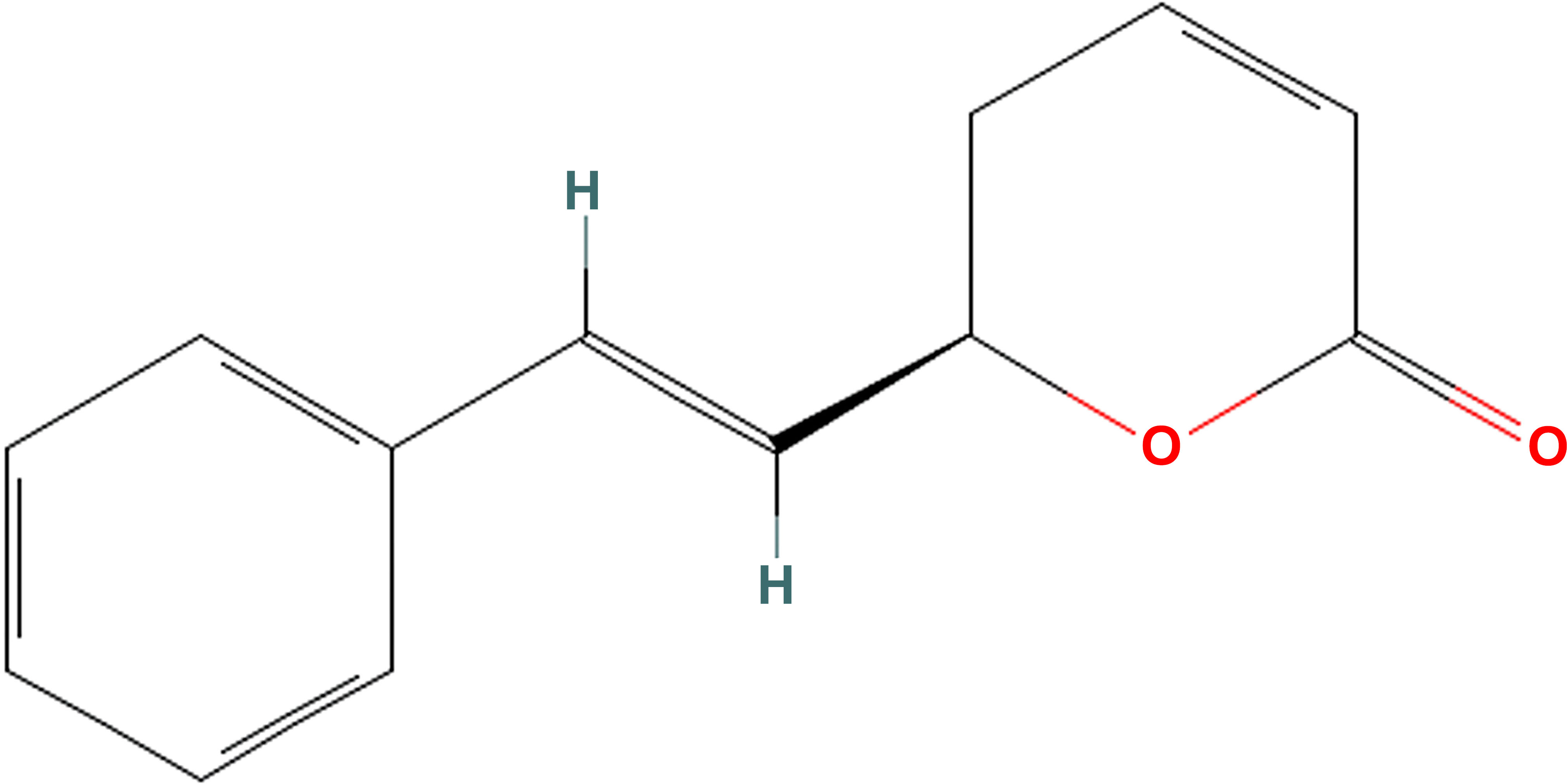
2D chemical structure of goniothalamin. The structure was retrieved from the PubChem database (CID: 6440856) [19].
Analysis of potential target fishing using the Similarity Ensemble Approach (SEA) search revealed bacterial proteins of significant statistical confidence as possible targets for Goniothalamin. Out of all the possible targets, two were prioritized due to their importance in the pathogenesis and replication of bacteria: the accessory gene regulator protein A (agrA) of Staphylococcus aureus and the ftsZ division protein of Escherichia coli. The target prediction results are displayed in Table 1.
| Target Key | Target Name | Organism | Description | P-value | MaxTC |
|---|---|---|---|---|---|
| AGRA_STAAU | agrA | S. aureus | Accessory gene regulator protein A | 1.873e-27 | 0.37 |
| FTSZ_ECOLI | ftsZ | E. coli | Cell division protein FtsZ | 7.758e-19 | 0.36 |
3.2. Functional Classification and Virulence Assessment
The selected targets were analyzed for their functional properties and virulence characteristics. Classifying functions via VICMPred placed both agrA and ftsZ in the “Cellular Process” category. Subsequent analysis through VirulentPred classified agrA as a virulent protein with a positive score and ftsZ as non-virulent, aligning with classification as an essential housekeeping protein. Confirmed via subcellular localization studies, all proteins were internal cell constituents (Table 2).
| Protein | Functional Class | Virulence Status | Virulence Score | Localization | Score |
|---|---|---|---|---|---|
| agrA | Cellular process | Virulent | 1.0266 | Cytoplasmic | 10.00 |
| ftsZ | Cellular process | Non-virulent | -1.068 | Cytoplasmic membrane | 10.00 |
3.3. Epitope Mapping and Antigenicity Validation
The virulent protein agrA was assessed for its immunogenic potential through B- and T- cell epitope mapping. Multiple epitopes showed high binding and exceeded the antigenicity threshold (> 0.4) as predicted by VaxiJen. The extensive vaccine development possibilities from these findings are detailed in Table 3.
| Epitope Type | Allele | Sequence | Position | Percentile Rank | VaxiJen Score |
|---|---|---|---|---|---|
| B-cell | - | DDPKQRE | 8-14 | - | 1.8986 |
| B-cell | - | IRKHDP | 75-80 | - | 1.6147 |
| MHC I | HLA-A*11:01 | LTYLTFVYK | 93-101 | 0.07% | 0.4809 |
| MHC I | HLA-A*11:01 | GSNSVYVQY | 148-156 | 0.22% | 1.0096 |
| MHC II | HLA-DRB1*04:01 | MKIFICEDDPKQREN | 1-15 | 0.19% | 0.9061 |
In assessing the immunogenic potential of the agrA protein, we conducted predictions for linear B-cell epitopes. The resulting profile listed several peaks attributed to surface accessibility, showing values above the 0.350 threshold (Fig. 2). Thus, agrA appears to carry notable immunogenic determinants for the construction of new vaccines.
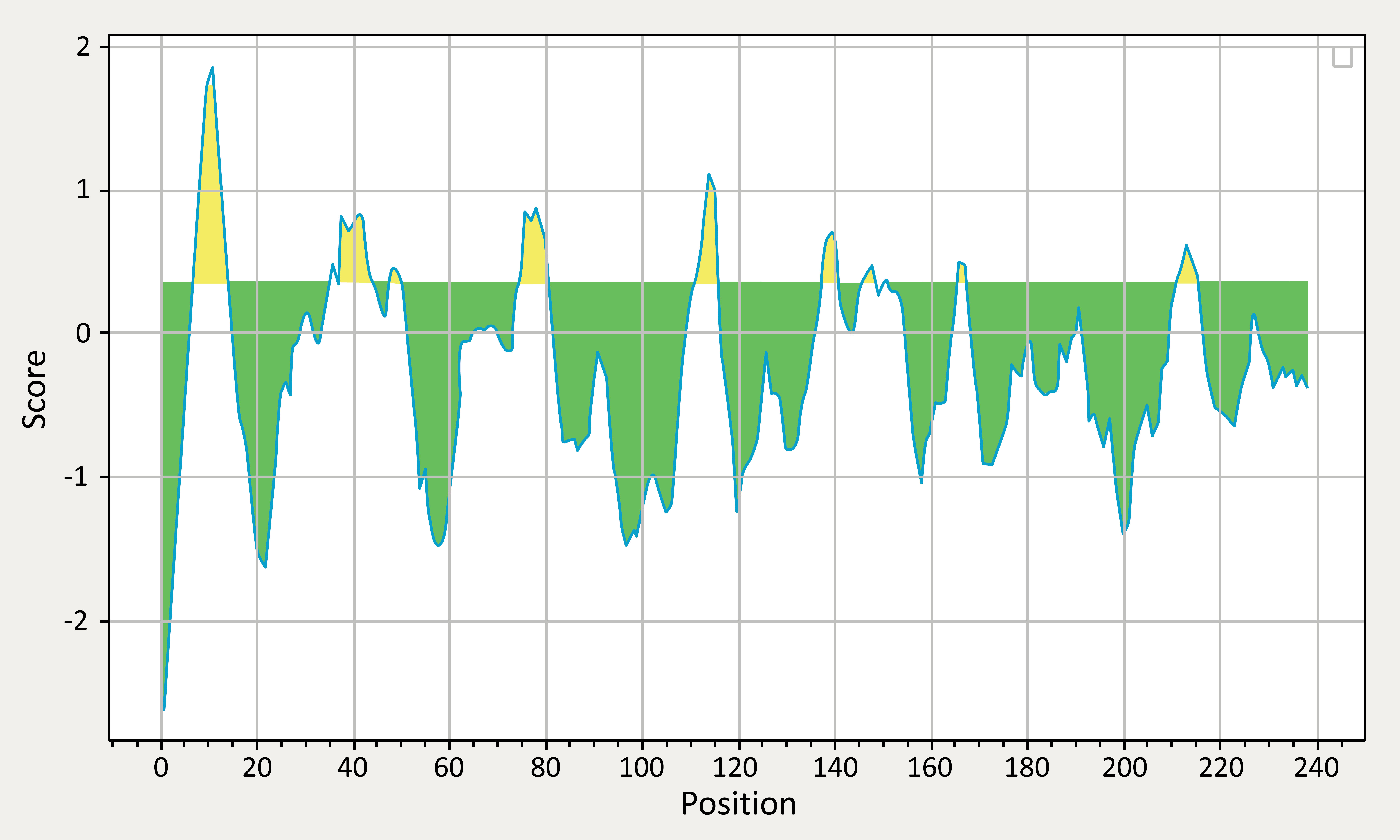
Linear B-cell epitope prediction profile of S. aureus agrA protein. Predictions were made using BepiPred 2.0. The yellow areas show regions that scored above the threshold (0.350) and are therefore considered to have a high likelihood of being B-cell epitopes.
3.4. Molecular Docking Simulation
Molecular docking was used to quantify the strength of the physical interaction between Goniothalamin and the target proteins. Goniothalamin showed spontaneous and stable binding to both target proteins with binding free energy (ΔG) values of less than -4.0 kcal/mol. The greatest affinity was found with the agrA protein, suggesting a strong molecular interaction (Table 4).
| Protein Target | PDB ID | Binding Method | Binding Affinity (kcal/mol) |
|---|---|---|---|
| agrA | 4G4K | Blind docking | -4.935 |
| ftsZ | 6UNX | Blind docking | -4.739 |
After the target proteins were characterized, the next step was to perform molecular docking to evaluate Goniothalamin's binding affinity. The compound was found to make stable interactions with agrA and ftsZ and was able to fit well within the binding pockets of both proteins (Fig. 3). The binding energies were found to be -4.935 kcal/mol and -4.739 kcal/mol.
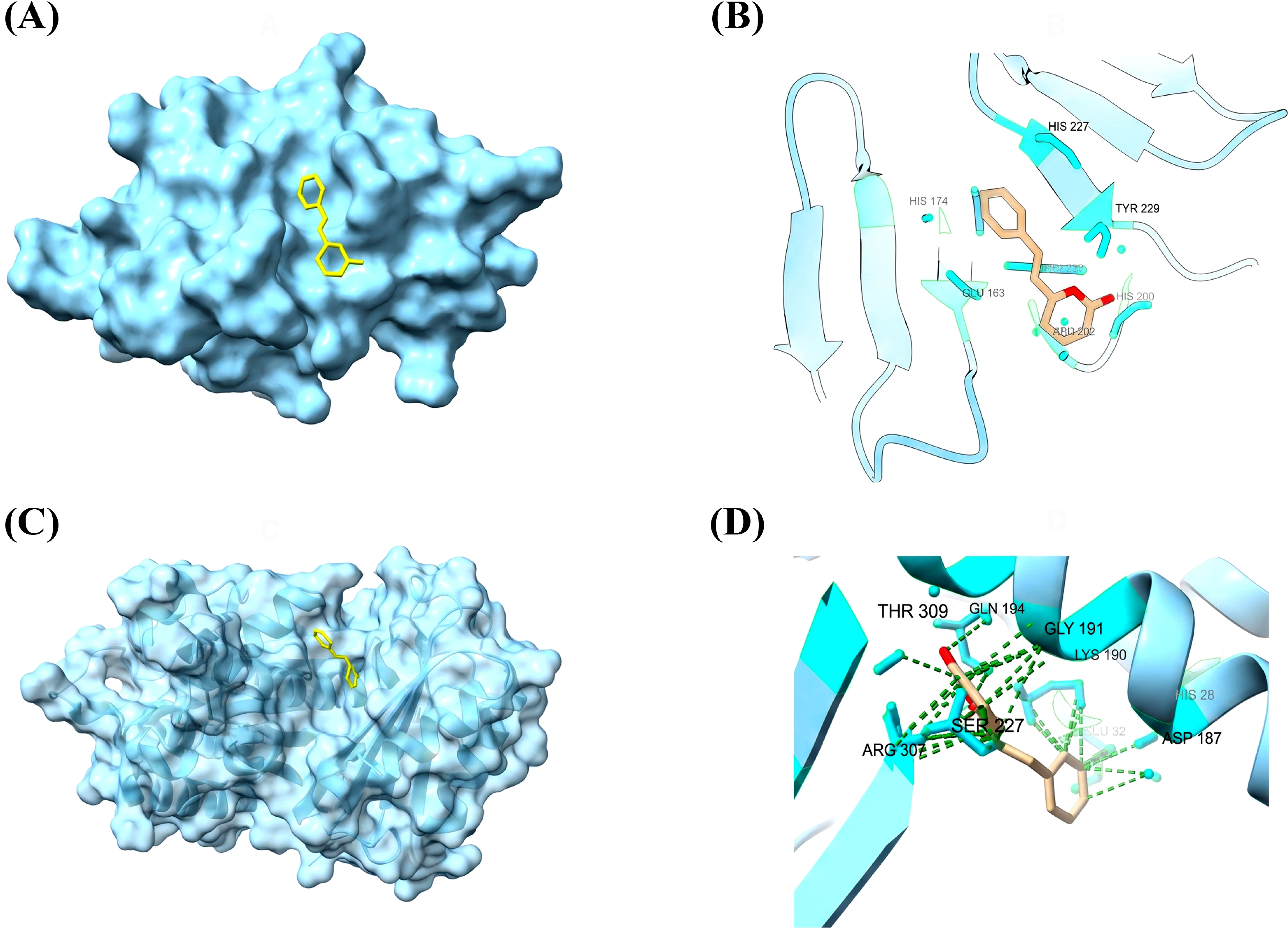
Molecular docking interaction of Goniothalamin with targeted bacterial proteins. (A) Entire structure of the S. aureus agrA protein (PDB ID: 4G4K) in surface view showing the binding pocket. (B) Close view of the molecular interactions of Goniothalamin with some key residues of agrA. (C) Entire structure of the E. coli ftsZ protein (PDB ID: 6UNX) showing the overall docking pose. (D) Interaction details of Goniothalamin within the active site of ftsZ, with some of the surrounding residues highlighted.
3.5. Comparative Binding and Selectivity Analysis
The possible selectivity of Goniothalamin towards microbial targets compared to human proteins was evaluated using the human Janus kinase 2 (JAK2) as a model in a comparative docking study to assess potential off-target effects within the human host. The docking studies showed that Goniothalamin has a binding free energy (ΔG) of -4.857 kcal/mol when docking to the JAK2 protein. This level of affinity is similar to that of the microbial targets but slightly lower than the binding affinity to S. aureus agrA protein. The comparative binding data for all the targets under study are presented in Table 5.
| Target Protein | Organism Type | PDB ID | Binding Affinity (kcal/mol) |
|---|---|---|---|
| agrA | S. aureus (Bacterial) | 4G4K | -4.935 |
| ftsZ | E. coli (Bacterial) | 6UNX | -4.739 |
| JAK2 | H. sapiens (Human) | 3RKP | -4.857 |
4. DISCUSSION
The worldwide issue of AMR calls for alternative therapeutic methods that neutralize pathogens and do not promote resistance. In this study, we examined Goniothalamin, a natural styryl-lactone, which may target agrA of Staphylococcus aureus and ftsZ of Escherichia coli. The proteins targeted suggest that this research may represent a pioneering broad-spectrum approach.
Aside from its possible uses as an anti-virulence agent, Goniothalamin also targets the FtsZ protein in E. coli that is involved in the process of bacterial replication. FtsZ is a tubulin-like GTPase that polymerizes to form a “Z-ring” structure that is essential for the assembly of the divisional septum [4, 20]. Goniothalamin is predicted to destabilize the septation apparatus as evidenced by its estimated binding energy of -4.739 kcal/mol. This is a vital contribution to medical microbiology as the ftsZ-targeted inhibitors could be used to address bacterial resistance issues in Gram-negative bacteria, especially extended-spectrum beta-lactamase (ESBL)-producing strains, which are becoming more and more resistant to drugs that target the bacterial cell wall [21].
One prominent finding from our analysis was the lack of typical hydrogen bonds, even though the free binding energies were stable. This suggests that the Goniothalamin-complex stability primarily arises from van der Waals and hydrophobic interactions, shown by the large amount of atomic contacts (agrA = 33 & ftsZ = 39). These “hydrophobic pockets” are in line with the lipophilic character of styryl-lactones, which facilitates their migration across the bacterial lipid bilayer and secure anchoring within the non-polar cavities of cytoplasmic targets [22]. This mechanism underscores the ability of the compound to reach active sites that are buried and unreachable to more polar compounds.
The selectivity analysis concerning human JAK2 recorded a binding affinity of -4.857 kcal/mol, which is very comparable to the microbial ones. Despite this stable interaction implying possible off-target binding to the human host, it does not indicate toxicity. Janus kinase 2 is a signaling molecule, and not all binding interactions lead to functional steric inhibition, except when the binding occurs at the catalytic ATP-binding pocket [23, 24]. Regardless, this result sets an important pharmacological standard and highlights that future developments with Goniothalamin-based drugs must include a focused aim to improving its microbial specificity and reducing its pharmacological interactions with human signaling proteins. Consequently, translating this anti-virulence strategy into clinical applications will require comprehensive in vitro and in vivo toxicity profiling to definitively confirm that the compound does not inadvertently disrupt normal human host cell functions.
The discovery of the highly immunogenic epitopes on the agrA protein, including the MKIFICEDDPKQREN peptide with a VaxiJen score of 0.9061, adds a prophylactic aspect to the study. The combination of reverse vaccinology and small-molecule targeting is a ’double strike’ strategy, where the compound blocks the activity of the target protein, while simultaneously activating the host immune response to the same pathogenic protein [23, 25]. This approach is expected to be useful for chronic infections such as MRSA, which require both an immediate therapeutic and a sustained immunological response.
5. STUDY LIMITATIONS
This study is primarily based on computational modeling and in silico predictions. Although the binding affinities and antigenicity scores are significant, the actual biological activity and clinical safety profiles must be further validated through in vitro enzymatic assays and in vivo toxicity testing to ensure therapeutic viability.
CONCLUSION
In this study, goniothalamin has been characterized as a unique dual-target antimicrobial scaffold, inhibiting both the agrA protein of S. aureus and the ftsZ protein of E. coli. The stable binding affinity against the LytTR domain of agrA of -4.935 kcal/mol exhibits a considerable anti-virulence activity, suggesting an obstruction of the primary regulatory systems of virulence factor production, which is especially important for hospital infection and control. Additionally, recognition of highly immunogenic epitopes from the presented targets and the selectivity profile against human JAK2 upon docking, shows that goniothalamin possesses the potential for dual therapeutic and immunoprophylactic use. Given the serious potential of goniothalamin to combat antimicrobial resistance, these studies should be the basis for further in vitro and in vivo studies to evaluate potential clinical applications of goniothalamin and preventive medicine.
AUTHORS’ CONTRIBUTIONS
The authors confirm contribution to the paper as follows: N.N.: Study conception and design, methodology, bioinformatic analysis, and drafting the manuscript; S.H.: Data collection and formal analysis; A.T.: Data interpretation and critical revision of the manuscript. All authors reviewed the results and approved the final version of the manuscript.
LIST OF ABBREVIATIONS
| AMR | = Antimicrobial Resistance |
| agrA | = Accessory gene regulator protein A |
| ftsZ | = Cell division protein FtsZ |
| MDR | = Multidrug-resistant |
| PDB | = Protein Data Bank |
| ∆G | = Gibbs Free Energy |
| JAK2 | = Janus Kinase 2 |
| SEA | = Similarity Ensemble Approach |
AVAILABILITY OF DATA AND MATERIALS
The data supporting the findings of the article are available in the PubChem database at https://pubchem.ncbi.nlm.nih.gov/compound/6440856, [19], and the RCSB Protein DataBank at https://www.rcsb.org under PDB IDs 4G4K and 6UNX.
ACKNOWLEDGEMENTS
The authors thank the University of Palangka Raya, Indonesia for providing facilities.